Lessons from a Lifetime in Trade: A Conversation with Nigel Comley
Discover the business story of Nigel Comley. With 40 years of global trade experience, he shares powerful lessons on trust, partnerships, and doing business across Africa and beyond.
AFRICA & CHINA
Harriet Comley
12/31/20255 min read
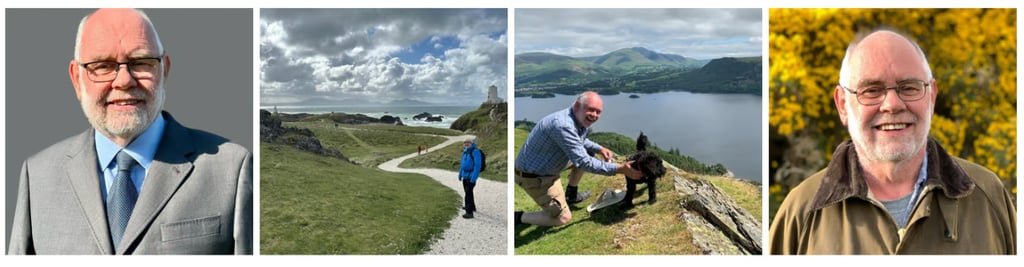
Experience is one of the greatest teachers in international trade. Few people understand that better than Nigel Comley. With more than four decades of experience working across Europe, Africa, and beyond, Nigel has built partnerships, delivered multimillion dollar education and equipment projects, and helped pioneer international contracts with what were then emerging economies. His career has been shaped not only by commercial success but by a commitment to integrity, trust, and building long term relationships. In this interview, Nigel reflects on the experiences, lessons, and advice that have defined his career in international business.
How did you first get into international trade?
My first job following graduation was with Massey Ferguson, the tractor manufacturer. I worked in a commercial role in the Countertrade Department, where countries like Brazil, Poland, and Libya bought tractors in complete knock down (CKD) or part knock down (PKD) form. In return those countries would provide products or commodities rather than using hard currency to pay for the equipment. This included a very diverse range of products such as coffee, skis, and oil. We had to match the sellers’ products with prospective buyers to achieve sales of tractors. I got to travel to Poland and Libya, see the facilities where the tractors would be assembled, and meet foreign dignitaries, including Lech Walesa, the leader of Solidarnosc, who later became the president of Poland.
What was your first job related to Africa?
My first real success in international trade started by chance during a conversation in Tripoli, Libya, where I was helping to unpack, inspect, commission, and install workshop equipment for assembling tractors. I was introduced to a farmer and entrepreneur from Benghazi who wanted to open a tractor maintenance workshop in the Green Mountain area of Libya. I was asked if I could provide all the necessary equipment to maintain tractors. Starting from scratch, I put together a comprehensive list of equipment from multiple suppliers and countries, including literature, specifications, and a funding package. A few months later, we supplied two forty foot containers of equipment worth five hundred thousand pounds, a significant contract in 1981, and it showed me the potential of a career in international trade.
You have been based in the UK but worked with many countries around the world, especially in Africa. Which countries have you worked with and what kind of projects?
After that Libya project, I was headhunted by one of my suppliers to join the export department of Cromwell Tools, the largest independent UK engineering tool supplier. This allowed me to pursue internationally funded projects in markets such as Ethiopia, Ghana, Tanzania, Uganda, and Rwanda. These multimillion dollar projects were backed by organisations like the World Bank, the European Community, the International Bank for Reconstruction and Development, and the Food and Agriculture Organisation. We had to bid through strict open tender processes under International Competitive Bidding, which meant sourcing equipment that met detailed terms on origin, specifications, delivery time, and quality, all at competitive pricing. While I started with workshop equipment, the portfolio eventually expanded. Most clients were vocational institutions, and I found myself procuring agricultural equipment, woodworking machines, welding tools, lab instruments, medical gear, and more. My two largest contracts, both exceeding fifteen million dollars, were in Romania and Ethiopia, involving equipment supply, training, commissioning, and delivery to multiple locations.
What kind of work did your company ICB Consultants do?
After years of working for others, I launched my own consultancy, ICB Consultants, named after the International Competitive Bidding tender model. I worked with previous employers and even former competitors, choosing projects and partners that aligned with my values. My work covered everything from sourcing and negotiating to purchasing, shipment, training, and installation. I took full ownership of every step except providing the funds for the goods, which came from the principals I worked with.
What is one project you are most proud of?
My first project in Libya. I was only twenty two and had a great boss, Mike Pink, who trusted me to handle everything. He reviewed my work but never interfered. That project gave me the confidence to see what I could do and taught me the value of trust and accountability.
What has changed in African trade since you started?
The internet, without a doubt. I come from a time of letters, telex, and fax. Not all clients had those either. The internet and mobile phone revolution transformed international trade with Africa. Africa even leapfrogged parts of Europe in mobile coverage. Suddenly, remote communities could access the world and global suppliers could reach new customers directly. Aspirations have also changed. African businesses and governments now know their value. They expect quality, fairness, and mutual benefit. They want real partnerships, not to be treated as a dumping ground for poor products or exploitative contracts. Trade today must benefit both sides and be rooted in respect.
What mistakes do new investors often make in Africa?
They expect things to move quickly. They do not. Bureaucracy is still a major factor, and accessing hard currency can be slow and complex. Letters of credit often take time to process. For example, in Ethiopia, companies must bid in monthly auctions for limited foreign currency, making international trade a slow and careful process. Another mistake is underestimating the demand for quality. Africa has learned fast. Buyers will no longer accept low grade goods just because they are cheap. If you want lasting relationships in Africa, you must commit to delivering quality and treating partners with fairness.
What is the most important thing in building trust in business?
Face to face interaction. Trust is built when people meet, talk, and understand each other's challenges. Start small, build confidence. If something goes wrong, be honest. If you are going to miss a deadline or delay a payment, tell the other party early. Trust is maintained not by being perfect but by being transparent and respectful.
What is your advice to young people who want to work in Africa?
Do it. Africa is growing fast and much more advanced than many outsiders realise. Visit, learn, be respectful, and stay open minded. Mobile networks are excellent, so you are never out of touch. But do not just do business. Engage with the people, learn their customs, and respect the way they live and work. That is how you build real connections.
You visited China. Where did you go and what stood out?
I joined a Leicester Chamber of Commerce delegation in partnership with the UK Embassy in China. We visited businesses in Shanghai and Ningbo, and I added a stop in Xiamen to meet a supplier. One memory that stuck was seeing Ningbo University, which was modelled exactly after Nottingham University in the UK, even the lake. But what struck me most was the sheer scale of China. Looking out from the Shanghai Tower, I was told there were fifteen cities along the river with populations bigger than London, just in one province. The scale and opportunity for trade were immense.
What do you enjoy doing outside of work?
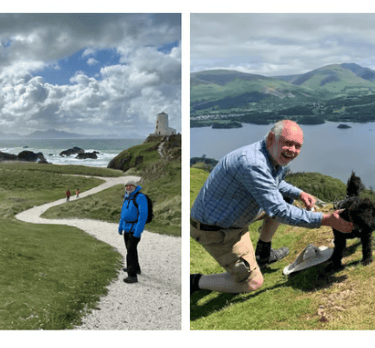
I have always thrived in competitive environments, and that energy carries through to my hobbies. I enjoy sports, though I mostly watch these days. I still do some match fishing. It is relaxing and gets me outdoors. I enjoy walking with my wife and dog, exploring the UK countryside and coast. After years of international travel, it is a joy to rediscover places closer to home.
Nigel's insights serve as both a roadmap and a reminder that sustainable business is built on respect, relationships, and a willingness to listen. His decades of experience navigating global tenders, building trust, and adapting through political and technological change offer valuable lessons for anyone interested in international trade, whether in Africa, China, or anywhere else in the world.